THE LAST BULLET: Tupac’s 30-Year Murder Mystery, the Man Who Finally Went Down — and the Conspiracies That Refuse to Die
For nearly three decades, Tupac Shakur’s murder lived between evidence and mythology. Then the man at the centre of the mystery began talking. Too much.
AN ICHIE TIMES ORIGINAL EXPOSITORY REPORT
At 25, Tupac Amaru Shakur was already larger than life.
He was a rapper, actor, poet, provocateur and social commentator whose music could move from anger to vulnerability within the same verse. His songs spoke about poverty, racism, police brutality, violence, love and survival.
Then, on a warm September night in Las Vegas, four bullets changed everything.
Tupac was sitting in a black BMW beside Marion “Suge” Knight, the powerful co-founder of Death Row Records. They had just left the MGM Grand after attending a Mike Tyson boxing match.
At a traffic light, a white Cadillac pulled alongside them.
Then came the gunfire.
Tupac was struck four times.
Six days later, on September 13, 1996, he was dead.
He was 25.
For the next 29 years, 11 months and 18 days, the murder remained one of the most enduring unsolved mysteries in popular culture.
Until August 31, 2026.
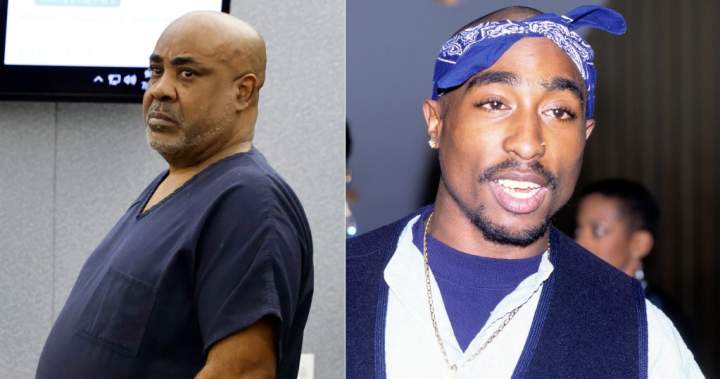
That was the day a Las Vegas jury convicted Duane “Keffe D” Davis, a former leader of the South Side Compton Crips, of first-degree murder with a deadly weapon in connection with Tupac’s killing.
The jury took less than three hours to reach its decision.
But the verdict did something unusual.
It solved part of the mystery.
And, at the same time, it left enough unanswered questions to keep the conspiracy machine running.
THE NIGHT THAT CHANGED HIP-HOP
To understand why Tupac’s murder became such an obsession, it is necessary to understand the atmosphere surrounding him.
The mid-1990s were the height of the so-called East Coast-West Coast rivalry in American hip-hop.
On one side stood Death Row Records, the Los Angeles powerhouse associated with Tupac and Suge Knight.
On the other was Bad Boy Records, the New York-based label headed by Sean “Puff Daddy” Combs and closely associated with The Notorious B.I.G.
The rivalry was commercial.
Then it became personal.
Then increasingly violent.
But investigators ultimately presented a more immediate explanation for Tupac’s murder: revenge.
Earlier on the night of September 7, Tupac and members of his entourage had confronted and assaulted Orlando “Baby Lane” Anderson at the MGM Grand.
Anderson was Davis’ nephew and a member of the South Side Compton Crips.
According to prosecutors, that confrontation became the spark.
Davis and others allegedly decided to retaliate.
Hours later, they found Tupac.
The shooting followed.
The prosecution’s case was that this was not an accidental encounter or spontaneous outburst.
It was a planned act of retaliation.
“It’s a plan, not an impulse,” prosecutors argued during the trial.
WHY DID IT TAKE 30 YEARS?
This is perhaps the most fascinating question.
It is tempting to imagine that police simply had no idea who was responsible.
That is not entirely true.
Investigators had names.
They had suspects.
They had people who were believed to know what happened.
What they did not have was a case strong enough to take to court.
The problem was compounded by the culture surrounding the crime.
Gang loyalties ran deep. Potential witnesses were reluctant to cooperate. People who knew what happened had little incentive to testify.
And then time began destroying the evidence.
People died.
Memories faded.
Investigative trails disappeared.
The alleged gunman, Anderson, was killed in 1998, less than two years after Tupac’s death.
Other men prosecutors say were in the Cadillac also died.
By the time authorities finally arrested Davis in 2023, he was essentially the last surviving person among those prosecutors connected directly to the Cadillac and the shooting.
The passage of time therefore became both the prosecution’s greatest obstacle and, strangely, one of its greatest assets.
Because the case eventually came down to one man’s words.
THE SUSPECT WHO WOULDN’T STOP TALKING
For years, Duane Davis was not a household name.
Then he started talking publicly about Tupac.
And talking.
And talking.
Davis gave interviews.
He appeared in documentaries.
He discussed the shooting.
And in 2019, he published his memoir, Compton Street Legend.
In those accounts, Davis placed himself inside the white Cadillac on the night Tupac was killed.
He described the events surrounding the shooting.
He acknowledged being involved in the confrontation and the subsequent retaliation.
He also said he had handed a gun toward the back seat.
But he did not consistently identify himself as the shooter.
In fact, prosecutors never claimed Davis personally fired the fatal shots.
Their argument was different.
They said he helped organise the attack, provided the weapon and participated in the retaliatory mission.
Under Nevada law, a person who intentionally assists or facilitates a murder can be held criminally responsible even if someone else pulls the trigger.
And suddenly, the man who had spent years telling his story had become the prosecution’s most important witness against himself.
WHEN THE STORY BECAME EVIDENCE
This is where the case became almost extraordinary.
Davis’ defence argued that his public accounts could not be trusted.
His lawyers portrayed him as a storyteller who had embellished his past to sell books, attract attention and enhance his reputation.
The memoir itself contained a disclaimer indicating that some details had been changed.
The defence therefore asked a simple question:
If Davis had lied about parts of his story, why should anyone believe the rest?
The prosecution had an answer.
Because the details may have changed, but the central story did not.
Davis repeatedly placed himself in the Cadillac.
He repeatedly described the confrontation involving Anderson.
He repeatedly linked the shooting to retaliation.
And prosecutors had recordings.
During the trial, jurors heard Davis’ statements and were shown his memoir.
The prosecution argued that Davis had effectively documented the crime himself.
His words, once publicity material, had become evidence.
That was the prosecution’s masterstroke.
THE 2008 INTERVIEW THAT CAME BACK TO HAUNT HIM
One of the most significant pieces of evidence was an interview Davis gave to police in 2008.
He discussed the shooting and described being in the Cadillac.
The legal history surrounding that interview was complicated, but prosecutors ultimately succeeded in getting later public statements and other evidence before the jury.
The passage of time had not erased Davis’ connection to the story.
It had created a paper — and audio — trail.
For investigators, this was invaluable.
For Davis, it was devastating.
The very thing that had kept his name in the Tupac story for years — his willingness to tell his version of events — became one of the central reasons a jury eventually convicted him.
THE THREE-HOUR VERDICT
After an 11-day trial and testimony from more than two dozen witnesses, the jury retired to deliberate.
It took less than three hours.
Guilty.
The courtroom became emotional.
Tupac’s sister, Sekyiwa “Set” Shakur, cried after the verdict and embraced members of the prosecution team.
For the Shakur family, it was an extraordinary moment.
For hip-hop, it was the closing of a chapter that had remained open since 1996.
For true-crime enthusiasts, however, one question remained:
Who actually fired the gun?
THE MAN WHO WAS NEVER CONVICTED
This is the uncomfortable complication in the Davis conviction.
The jury has convicted Davis of Tupac’s murder.
But Davis was not convicted as the person who pulled the trigger.
Prosecutors maintained that Orlando Anderson was the gunman.
Anderson was never prosecuted for Tupac’s murder.
He died in 1998.
That means the person alleged by prosecutors to have fired the fatal shots is dead and was never cross-examined in a courtroom.
The other men prosecutors connected to the Cadillac are also dead.
So the Davis conviction does not give us a courtroom account from the alleged shooter.
Instead, it establishes Davis’ criminal responsibility for helping orchestrate and facilitate the killing.
And that distinction matters.
WHAT DOES THIS DO TO THE CONSPIRACY THEORIES?
For 30 years, the unanswered question became fertile ground for theories.
Some people believed Tupac was killed because of the East Coast-West Coast feud.
Others suspected record executives.
Some theories implicated Suge Knight.
Others pointed fingers at Sean “Diddy” Combs.
There were theories involving corrupt police officers.
There were theories about gang politics.
There were theories that Tupac was still alive.
The most extravagant theories suggested a sophisticated plot involving powerful people in the music industry.
But a conspiracy thrives in darkness.
And the Tupac case spent almost three decades in darkness.
The conviction changes that.
The prosecution’s successful case did not require an elaborate international conspiracy.
It did not require a secret music-industry assassination programme.
It did not require Tupac to have been targeted by some mysterious hidden organisation.
Instead, the jury accepted a much more direct narrative:
A gang-related confrontation produced retaliation, and that retaliation ended with Tupac Shakur being shot.
That is a far less glamorous explanation.
But it is also one supported by a criminal conviction.
BUT THE VERDICT DOES NOT KILL EVERY QUESTION
This is where caution is necessary.
The verdict does not establish that every statement Davis has ever made is true.
It does not establish every detail of the night.
It does not identify the shooter through a conviction.
It does not prove that every person ever mentioned in connection with Tupac’s murder was uninvolved.
And it does not automatically answer every question surrounding the broader East Coast-West Coast rivalry.
What it does establish is narrower — but enormously significant:
A jury found beyond a reasonable doubt that Davis was criminally responsible for Tupac Shakur’s murder.
That is no longer a theory.
It is a verdict.
THE STRANGEST PART OF THE STORY
Perhaps the greatest irony is that the investigation was revived not because someone suddenly discovered a mysterious new fingerprint or a hidden murder weapon.
It was revived because Duane Davis kept talking.
His 2019 memoir helped put the case back into public consciousness.
His interviews preserved his version of events.
His public statements gave investigators material to examine.
Eventually, those statements became evidence.
In other words, Davis may have helped solve the very mystery he had spent years helping to mythologise.
He did not necessarily talk himself into the original crime.
But he talked himself into the courtroom.
And then, according to the jury, into a conviction.
THE CONSPIRACY THAT MAY NEVER DIE
There is another irony here.
Even after a conviction, conspiracy theories are unlikely to disappear.
In fact, the conviction may produce new ones.
Why?
Because the central mystery has not been completely answered.
Who fired the fatal shots?
Why were some suspects never charged?
Why did the investigation take so long?
Could other people have known more?
Were there missed opportunities in the original investigation?
Those questions will continue to feed documentaries, podcasts, books, YouTube channels and social-media debates.
The difference now is that anyone advancing a new theory has to confront something that did not exist before:
a jury verdict.
The burden has changed.
The question is no longer simply:
“Who killed Tupac?”
It is now:
“What evidence can disprove the story that a jury has accepted?”
That is a much higher bar.
THE FINAL TWIST
For almost three decades, Tupac’s murder was a story without an ending.
There was a victim.
There was a crime scene.
There were suspects.
There were rumours.
There were theories.
There were documentaries.
There were songs.
There were accusations.
But there was no conviction.
Now there is.
Duane “Keffe D” Davis is guilty of Tupac Shakur’s murder.
He faces the possibility of life imprisonment, with sentencing scheduled for October 13, 2026, and he has indicated that he intends to appeal.
But the case still contains one final mystery.
The man convicted of Tupac’s murder is not the man prosecutors say fired the bullet.
The alleged gunman is dead.
The convicted organiser is alive.
And Tupac himself remains frozen forever at 25.
Perhaps that is why the mystery endured for so long.
Tupac did not simply die.
He became a question.
For nearly 30 years, the world supplied its own answers.
Now a jury has supplied one of its own.
Whether history will accept it as the final answer remains to be seen.
But one thing is certain:
The longest-running murder mystery in hip-hop has finally entered the courtroom — and walked out with a verdict.