
NOA, Akobundu Promote Skills, Education as Alternatives for Southeast Youths to Crime
By Elochukwu Benjamin | IchieTimes
Residents of Abia State, particularly youths, women and other vulnerable groups, are expected to benefit from expanded public enlightenment, community engagement and support initiatives aimed at curbing drug abuse, violent crime, gender-based violence and human trafficking.
This is as the National Orientation Agency (NOA), in collaboration with Senator Augustine O. Akobundu, representing Abia Central Senatorial District, has launched a sensitisation campaign that will cover the six local government areas in the district through town hall meetings, school integrity clubs, multilingual radio programmes and partnerships with community and religious leaders.
The initiative is also expected to promote access to rehabilitation services for persons affected by drug dependence, strengthen support for survivors of abuse and encourage the establishment of additional sexual assault centres.
Speaking at the one-day sensitisation programme, Senator Akobundu, represented by his Media Adviser and Head of Media Unit, Chief Jude Chijioke Ndukwe, urged youths to reject drug abuse, cultism, fraud, violent crimes and violence against women.
He encouraged young people to embrace education, vocational training, agriculture, sports, creative arts and digital technology as pathways to self-reliance and sustainable development, stressing that their choices would significantly influence the future of Abia State.
The senator also condemned gender-based violence, describing it as an affront to human dignity that required a collective response from individuals, families and communities.
In his address, the Director-General of NOA, Mallam Lanre Issa-Onilu, represented by the South-East Zonal Director, Mrs Theresa Maduekwe, said public enlightenment and changes in societal attitudes were essential to tackling drug abuse, violent crime and gender-based violence.
He commended Abia State Governor, Alex Otti, for his opposition to drug-related offences and called for coordinated action involving government institutions, security agencies, traditional rulers, religious leaders, parents, schools and community organisations.
Issa-Onilu also advocated stronger support for victims of abuse, improved rehabilitation services for people affected by drug dependence and the establishment of more sexual assault centres to assist survivors of gender-based violence.
The Abia State Director of NOA, Mr Chidi Unobagha, said the campaign was designed to promote responsible citizenship, strengthen family values and protect vulnerable members of society.
He noted that extending the initiative across the six local government areas of Abia Central would enable the agency to reach more residents and sustain efforts against drug abuse, domestic violence, gender-based violence and child trafficking.
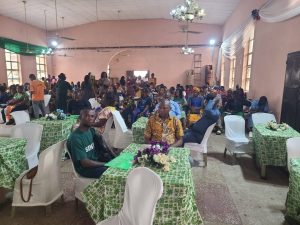
Unobagha emphasised the role of the family in instilling discipline, honesty, respect and responsibility in children, urging parents, teachers, religious institutions and community leaders to work together towards building safer communities.
Also speaking, the Abia State Commissioner for Sports and Youth Development, Sir Nwaobilor Ananaba, represented by the ministry’s Permanent Secretary, Mrs Jane Igwe, encouraged young people to develop their talents and acquire practical skills.
The traditional ruler of Eziama na Mgbaja Autonomous Community, HRM Eze Chiabuotu Emelike, who chaired the event, called for the inclusion of correctional institutions in rehabilitation and public enlightenment programmes, alongside stronger community participation in crime prevention and greater accountability among security personnel.
The Chief Imam of Abia State, Sheikh Ali Ukiwo, advocated women’s economic empowerment as a means of strengthening families, while the Assistant Commander of Narcotics of the National Drug Law Enforcement Agency (NDLEA) in Abia State, Frank Nwaohammuo, highlighted the harmful effects of drug abuse on society and national development.
Izunna Iwobi, representing the National Agency for the Prohibition of Trafficking in Persons (NAPTIP), addressed domestic violence and its implications for family values, while representatives of the Nigeria Security and Civil Defence Corps (NSCDC), Nigeria Immigration Service and other security agencies called for stronger inter-agency cooperation and community involvement in preventing crime and protecting children.
The organisers said the initiative would rely on sustained engagement with communities and relevant institutions to promote responsible behaviour, protect vulnerable groups and improve public safety.