
AI, Jobs and the Future of the South East: Are We Ready for the Technology Revolution?
By Chibuzo Obidike | IchieTimes
As Artificial Intelligence continues to reshape jobs, education, business and public administration, technology leaders in the South East have challenged the region to move beyond consuming digital innovations and begin developing homegrown solutions capable of driving economic growth.
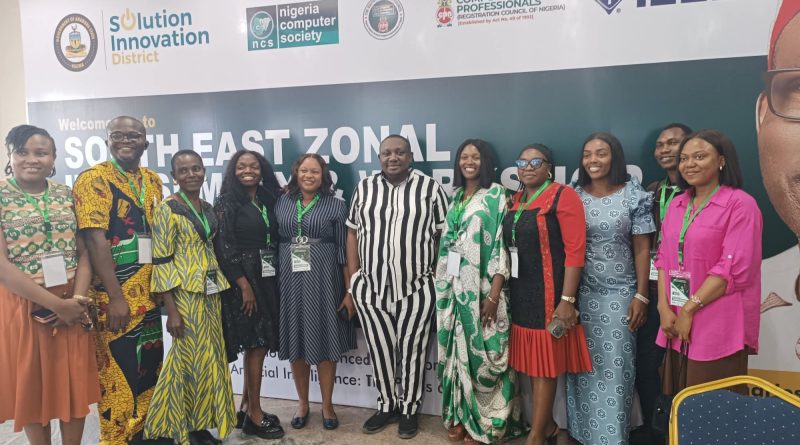
The call dominated the 2026 South East Zonal IT Assembly and Workshop in Anambra, where Governor Chukwuma Soludo received the IT Governor of the Year Award from the Nigeria Computer Society, while stakeholders examined how the region could harness AI without ignoring its risks.
The discussions raised critical questions about the future of employment, the preparedness of young people, cybersecurity, innovation and the ability of South East institutions to convert their intellectual and entrepreneurial strengths into economic opportunities.
The Vice Chancellor of the University of the Niger, Professor Chinedu Nebo, warned that poorly managed AI adoption could deepen existing inequalities, insisting that technology must serve humanity and address challenges in education, healthcare, electricity, infrastructure and industrial productivity.
His counterpart at Nnamdi Azikiwe University, Awka, argued that the region should not fear AI because of possible job losses but prepare for changing employment patterns and emerging career opportunities. He cited UNIZIK’s AI tool for converting handwritten academic records into editable digital formats within seconds as evidence of the potential for homegrown innovation.
The Anambra State Government, through its Special Adviser on Innovation and Business Incubation, Ms Chinwe Okoli, disclosed that more than 264,000 residents had acquired digital skills through the 1 Million Anambra Digital Tribe initiative and Code Anambra programmes, with a target of reaching one million by 2030.
However, the NCS South East Zonal Coordinator, Engr. Chidiebere Ugwuegbulam, insisted that the region needed stronger collaboration among government, universities, technology professionals and businesses. He also proposed integrating ICT and software development into the traditional Igbo apprenticeship system and called for a ₦45 million support fund to acquire a vehicle for professional activities across the five South East states.
With a research consortium, technology innovation hackathon, empowerment symposiums and Igbo entrepreneurship activities featuring at the assembly, the challenge now is how to translate the ideas and commitments into practical opportunities for the region’s people.