Who Approved These Buildings? Trans Nkisi Erosion Raises Questions Over Regulatory Failure
By Ichie Times
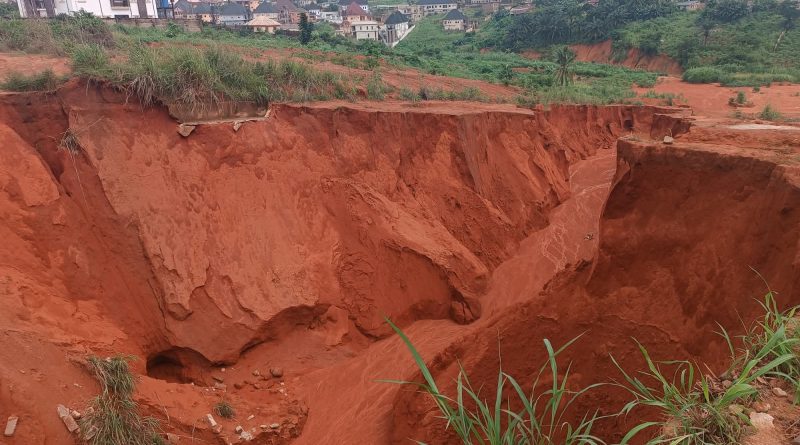
The alarming erosion threatening lives, property and critical infrastructure at Trans Nkisi, near the Nkisi Bridge in Onitsha, has exposed more than just environmental degradation. It has raised serious questions about the effectiveness of development control, the responsibilities of local authorities, community leadership and government regulatory agencies in preventing illegal construction on waterways.
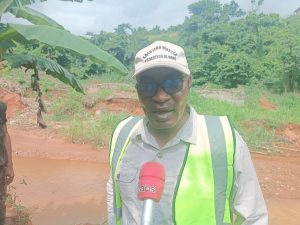
During an inspection of the site, the Anambra State Commissioner for Environment, Barrister Clement Aguiyi, described the situation as a preventable disaster driven largely by human activities.
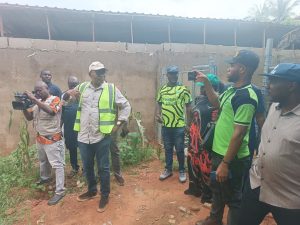
According to the commissioner, buildings erected on wetlands and natural drainage channels have narrowed the waterway, obstructed the natural flow of stormwater and accelerated the spread of gully erosion. One of the affected structures, reportedly constructed only last year, is already on the verge of collapse.
The inspection also revealed that the protective stone embankment beneath the Nkisi Bridge has been severely eroded, raising concerns that continued environmental abuse could compromise the structural integrity of the bridge if urgent intervention is not undertaken.
While the immediate focus is on the environmental damage, the situation also raises broader governance concerns.
How were buildings allowed to emerge on designated wetlands? Did the developers obtain statutory approvals? If approvals were granted, were proper environmental and engineering assessments carried out? If no approvals existed, why were the projects not stopped before construction progressed?
These are questions that extend beyond the Ministry of Environment.
The Ministry of Physical Planning, local government authorities, community leadership, environmental regulators and development control agencies all have statutory responsibilities to monitor land use and prevent illegal developments capable of endangering public safety.
Communities also have a role to play. Traditional rulers, presidents-general, village leaders and residents are often the first to notice illegal developments within their neighbourhoods. Early reporting and community vigilance can prevent environmental disasters before they escalate.
Barrister Aguiyi questioned the rationale behind approving or permitting developments in such a fragile ecosystem, insisting that wetlands are natural drainage corridors that must remain free from encroachment.
He disclosed that the matter would be referred to the Ministry of Physical Planning to determine whether the affected structures received lawful approvals, stressing that they do not meet environmental compliance requirements.
The commissioner also blamed indiscriminate excavation activities in the area for further destabilising the soil and accelerating erosion.
Environmental experts have consistently warned that uncontrolled urbanisation, poor drainage planning, sand excavation and construction on flood plains remain major contributors to erosion across Anambra State.
As the rains continue, the Trans Nkisi erosion site serves as a reminder that environmental disasters rarely occur overnight. They often begin with ignored regulations, weak enforcement and collective silence.
Preventing the next erosion disaster will require stronger inter-agency collaboration, stricter enforcement of planning laws, greater accountability for illegal developments and active participation by host communities.
The question is no longer whether erosion is spreading. The question is whether the institutions charged with protecting the environment are acting early enough to stop preventable disasters before lives and public infrastructure are put at risk.