The world is now led by madmen – from Trump to Infantino
By David Okpokwasili
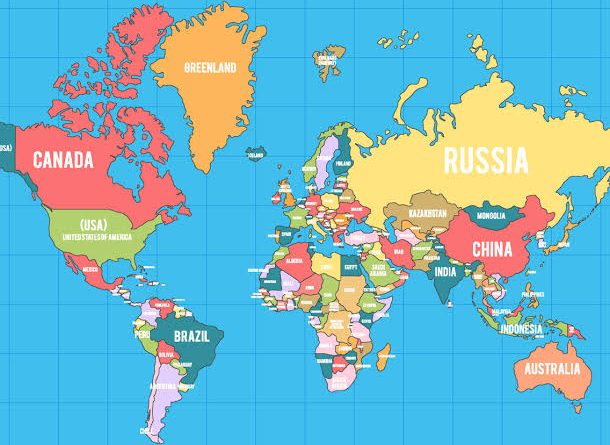
A kind of particular madness does not announce itself with a straitjacket or a padded cell. It is clothed in suit, behind a podium, flanked by flags, applauded by crowds who mistake volume for vision and defiance for strength. Increasingly, this is the madness that defines global leadership in 2026 — a world where hyper-nationalism, polarization, performative strongman politics, and moral cowardice have replaced statesmanship as the operating currency of power. From Washington to Buenos Aires, from Pretoria to Rome, from Moscow to Tel Aviv, from Kyiv to Zurich, and across the cosmetic democracies of West Africa, the pattern repeats: leaders more interested in spectacle, tribe, and self-preservation than in the quiet, unglamorous work of governing wisely.
There are many of these leaders across the globe but lets fixate on the popular few.
No figure embodies this era more completely than Donald Trump. His second term has doubled down on the transactional, grievance-driven nationalism that first defined him — tariffs deployed as blunt instruments of political theatre, immigration crackdowns pitched more as spectacle than policy, and a foreign policy style built on personal rapport with strongmen rather than institutional alliance. Perhaps nowhere was this more visible than in his conspicuous entanglement with FIFA’s 2026 World Cup. Trump did not merely attend football’s showcase tournament — he was awarded FIFA’s inaugural “Peace Prize” by President Gianni Infantino, personally intervened in a disciplinary decision involving a player, and stood beside Infantino to hand over the trophy. The optics of a sitting American president inserting himself into the machinery of a global sporting institution, and being rewarded for it, capture something essential about this moment: the blurring of governance, spectacle, and personal cult.
Trump’s approach to Ukraine has followed the same instinct — branding Volodymyr Zelensky a “dictator without elections” even as Ukraine remains under the martial law that Trump’s own administration has periodically pressured Kyiv to lift for the sake of optics rather than security. It is nationalism as performance, diplomacy as reality television, and policy as a series of grievances aired for an audience.
There seems to be a long list of boxes that Trump has ticked in this regard with now a global following. From Nayib Bukele of El Salvador and erstwhile Prime Minister of Hungary who was butted in the polls last May.
In Argentina, Javier Milei has pursued his own brand of radicalism — chainsaw economics wielded as both metaphor and literal campaign prop, a libertarian shock therapy that has slashed subsidies, gutted ministries, and reoriented the state around a near-religious faith in deregulation. Milei’s rhetoric is deliberately incendiary: he has branded political opponents “parasites,” dismissed social spending as theft, and built a governing style that thrives on confrontation rather than consensus. Whatever the merits of his inflation-taming credentials, his method is polarization by design — a leader who treats compromise itself as a form of defeat. Argentina under Milei has become a live laboratory for how far a hyper-ideological project can be pushed before social cohesion frays, and the jury on that experiment is still very much out.
It seems his to-do list is half checked as he continues to beat his own records. This week, he announced his government’s intention to kick out of his country people who made incindiary remark about his country’s performance at the World Cup.
Intolerance is an evident characteristic of mad men.
Across Europe, the mainstreaming of the far right is no longer a fringe phenomenon — it is government. Italy, under Giorgia Meloni, has become the poster child of this shift: a former fringe party leader now presiding over one of the EU’s founding members, pursuing hardline anti-immigration policies, offshore migrant processing arrangements, and a nationalist cultural agenda dressed in the language of sovereignty and tradition. Meloni has proven more diplomatically disciplined than some of her populist peers, but the substance of her platform — restricting asylum pathways, tightening borders, and courting a base energized by anti-immigrant sentiment — sits comfortably within the broader continental pattern. From France’s resurgent National Rally to Germany’s Alternative für Deutschland posting record results, to similar movements gaining ground in the Netherlands, Austria, and Scandinavia, Europe’s political center is being hollowed out by parties that treat the immigrant, the refugee, and the outsider as the organizing threat around which national identity must be rebuilt. This is not merely a swing of the pendulum; it is a continent relegating the assumptions of post-war liberal order.
Vladimir Putin’s Russia continues to play a different game entirely — not the loud, performative nationalism of Trump or Milei, but a colder, more calculated maneuvering. Putin has spent years questioning the legitimacy of Zelensky’s presidency, seizing on the postponed Ukrainian elections as a propaganda cudgel, even floating the idea of a UN-backed transitional government for Kyiv. It is a masterclass in weaponizing procedural technicalities — using the very martial law necessitated by his own invasion as ammunition to delegitimize the government resisting it. Domestically, dissent remains tightly controlled, opposition figures marginalized or exiled, and the machinery of the state fused ever more tightly around one man’s continued grip on power. This is madness of a quieter, more patient variety — no less dangerous for its restraint.
Even Volodymyr Zelensky, the leader most sympathetically cast in this global drama as the defender of a nation under existential assault, is not immune to the era’s contradictions. Ukraine’s parliament, under his signature, passed legislation that watchdog groups say stripped independence from the country’s key anti-corruption bodies, before public backlash forced a partial reversal. Opposition parties remain banned under martial law. Elections that were constitutionally due in 2024 have now stretched more than two years past their term, defended — reasonably, given the circumstances of an active invasion — as a wartime necessity, but exploited relentlessly by Moscow and, at times, by Washington as evidence of eroding democratic legitimacy. Zelensky’s predicament is genuinely different from the others on this list: he leads under literal bombardment, and his caution about elections reflects the near-universal view within Ukraine itself. But the broader point stands — even the most sympathetic figure in this landscape governs inside a democratic gray zone shaped by war, and his adversaries have been skilled at turning that gray zone into a weapon.
Next on the list is Benjamin Netanyahu. His governance has, for years now, blurred the line between national security policy and personal political survival. Facing corruption charges that have shadowed his premiership, presiding over a war in Gaza that has drawn sustained international condemnation over civilian casualties and humanitarian access, and governing atop a coalition dependent on its most hardline nationalist-religious factions, Netanyahu has repeatedly appeared to calculate policy through the lens of what keeps his coalition — and his own legal jeopardy — intact. Critics across the Israeli political spectrum and internationally have accused him of extending conflict and resisting off-ramps that might otherwise have been available, precisely because a wartime footing insulates him from the political reckoning that peace, and elections, would bring.
South Africa presents a different but related failure — not the madness of hyperactive nationalism, but the danger of delayed leadership. As xenophobic violence swept South African townships this year, with Mozambican, Malawian, Zimbabwean, Ghanaian, and Nigerian nationals attacked, displaced, and in some documented cases killed, President Cyril Ramaphosa’s government took weeks to move from statements of concern to concrete action. To be fair to the record, Ramaphosa did eventually speak — condemning the attacks as “sad and abhorrent,” calling them the work of “opportunists,” and dispatching envoys across the continent to repair the diplomatic damage. But the sequence tells its own story: the violence escalated for weeks, tens of thousands of migrants fled the country, and only after mounting continental pressure — including Nigeria organizing emergency repatriation flights and Ghana summoning South Africa’s ambassador — did Pretoria pivot toward decisive border and law-enforcement measures. Leadership measured only in reactive statements, arriving after the damage is done, is a soft complicity of its own kind. When African leaders cannot guarantee the safety of fellow Africans within their own borders, the pan-African solidarity so often invoked in speeches reveals itself as rhetoric without spine.
The world of sports is not insulated. Gianni Infantino’s FIFA presidency offers perhaps the most darkly comic illustration of how thoroughly institutional neutrality has collapsed in this era. FIFA’s own statutes proclaim strict neutrality in matters of politics — and yet Infantino handed Donald Trump a specially invented “Peace Prize” at the 2026 World Cup draw, drew a formal ethics complaint over the optics of political favoritism, and stood accused of allowing presidential pressure to reverse a disciplinary ruling mid-tournament. When confronted with criticism over visa restrictions affecting fans and officials, hydration-break controversies, and the treatment of Iran’s team amid regional tensions, Infantino did not engage with the substance — he published a lengthy Instagram open letter accusing critics of “spreading hate” and urging them to “meditate and pray.” This is the grammar of the age: institutional leaders responding to legitimate scrutiny not with accountability, but with the aggrieved theatrics of a political strongman – or religion when it mostly suits.
The latest attempt to shut his ears from voices of reason as he grovels to sell football to his North American suitors is the demonstration of walloping madness.
And then there is the recurring tragedy closer to home — the cosmetic governance style that continues to define large parts of West Africa. Democratic form without democratic substance: elections held but their outcomes contested or manufactured; anti-corruption rhetoric deployed generously while corruption itself persists structurally; ribbon-cuttings and photo-friendly infrastructure launches prioritized over the harder, less visible work of institution-building, judicial independence, and genuine accountability. Across the subregion, incumbency has too often become an end in itself, constitutions bent to accommodate third terms or engineered successions, and civil society space steadily narrowed even as leaders speak fluently the language of democracy for international audiences. It is governance as costume — the right words in the right rooms, while the lived reality for citizens remains one of weak institutions and unaccountable power.
What unites these modern madness is a common posture: the abandonment of governance as service to the governed, in favor of governance as performance for the base, the coalition, the algorithm, or the self. Madness, in this sense, is not a clinical diagnosis. It is a description of a global political culture that rewards spectacle over substance, tribalism over cohesion, and survival over statesmanship — and a citizenry, worldwide, still waiting for leadership sane enough to put the governed before the governing.