
Why Anambra Is Planning More Airports Despite Deafening Public Criticisms- Works Commissioner Explains
By Chibuzo Obidike | IchieTimes
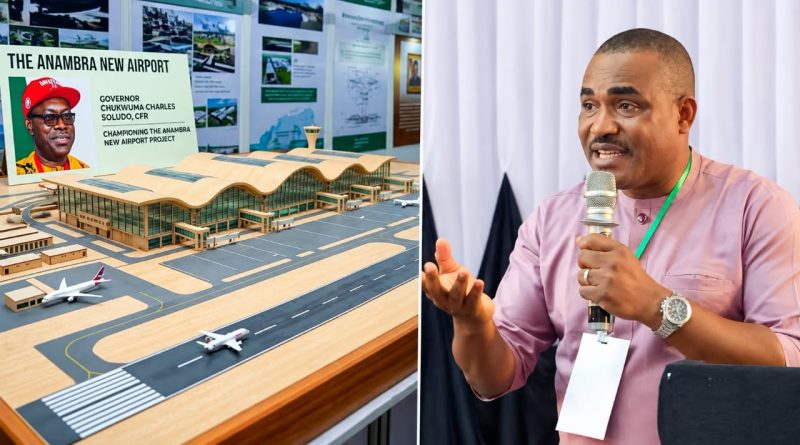
As questions continue to emerge among Anambra residents over the need for a second airport, the state government says its plan is driven by a long term vision to prepare for future population growth, economic expansion and the transportation demands of coming generations.
The Commissioner for Works and Infrastructure, Arc. Okey Ezeobi, explained the government’s position at the 2026 conference of the Nigerian Institute of Architects, Anambra State Chapter, where he disclosed that Anambra was planning to have three operational airports by 2070.
According to Ezeobi, the second airport is under construction, while the government is securing land for a proposed third airport as part of the state’s Vision 2070 development plan.
The commissioner said the decision was informed by the need to plan ahead rather than wait until population growth and increased economic activities create pressure on existing aviation infrastructure.
He explained that failure to make provisions for future demand could leave the state facing capacity challenges, including situations where airlines might struggle to accommodate additional flights because of limited space and scheduling constraints.
For the government, the plan is therefore not only about the immediate demand for air travel but also about preparing Anambra for the scale of development it anticipates in the decades ahead.
The explanation comes amid public concerns about whether the state needs another airport when the long term benefits and practical requirements of the project remain important questions for residents.
Ezeobi’s remarks suggest that the government sees airport development as part of a wider strategy to accommodate future economic growth and prevent infrastructure limitations from becoming obstacles to progress.
The proposed third airport, he indicated, is also part of this long range planning, with the ongoing effort to secure land intended to make room for future needs.
While the target year of 2070 may appear distant, the commissioner’s argument is that major infrastructure requires early planning because land availability, population growth and the demands of expanding economic activities cannot be addressed effectively at the last minute.
For residents, the key issue remains how the government’s long term vision will translate into practical benefits for the people of Anambra and how the planned facilities will meet the state’s future transportation needs.
The government’s explanation places the second airport within a broader vision of where Anambra hopes to be in the coming decades, rather than presenting it solely as a response to current demand.