Anambra @35: Heeding Soludo’s Call for Environmental Sustainability
By David Okpokwasili
As Anambra State marks 35 years of existence, a question worth sitting with quietly, away from the noise of anniversary fanfare, is this: what good is a state’s history if it has no guaranteed future? It is a blunt question that our current realities have made possible to avoid. At 35, Anambra is not just counting years; it is confronting an existential arithmetic that few states in Nigeria have had to face so starkly.
Can we truly celebrate this new milestone if the very land beneath it is disappearing?
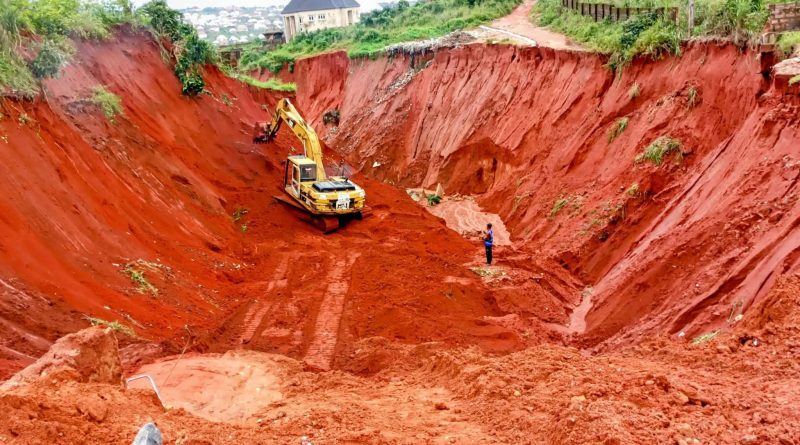
Is Anambra shrinking and sinking? This is not rhetorical exaggeration. According to official records, there are 1000 active erosion sites in Anambra state (This figure, unfortunately, is over five years). For a state with the smallest landmass in Nigeria after Lagos, this statistic is both revealing and borderline worrisome. Governor Chukwuma Soludoand his Commissioner for Environment, Dr Clem Aguiyi has in the past few weeks raised this concern have on several occasions raised this awareness. But has the people understood this urgency?
The governor had followed his words with action by declaring a state of emergency on environmental degradation? He mandated the immediate desilting of drainage systems statewide and ordered a halt to indiscriminate sand mining, an activity long understood to accelerate erosion but rarely confronted with this much institutional will. Why has sand mining, in particular, become such a flashpoint? Because it is one of those quiet, profitable, and destructive habits that communities have tolerated for decades, never quite reckoning with the long-term cost until the land itself begins to give way.
In 2024, the state passed the Environmental Management, Protection and Administration Law, arguably one of the most comprehensive pieces of sub-national environmental legislation in the country. It prohibits indiscriminate waste disposal, bans open burning of refuse, penalizes poor drainage practices, and enforces environmental impact assessments for new developments. Is a law, on its own, enough? Certainly not. But is it a meaningful foundation absent in most Nigerian states? Absolutely.
Every resident must, therefore, answer honestly: are you part of the drainage problem or part of the solution? Every blocked gutter, every sachet water bag tossed carelessly into a canal, contributes to the very flooding residents complain about. Should citizens continue outsourcing environmental responsibility entirely to government while contributing to the damage themselves?
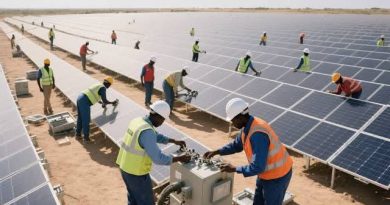
Under the New Sustainable Anambra strategy, the administration has tied environmental remediation to green financing and climate resilience, courting international partners including the European Union for support. Soludo’s own words on this are unambiguous: green, he insists, is no longer optional but necessary for survival. Is this an overstatement? Consider that the administration has committed to planting over a million trees annually, touching all of the state’s 179 communities in partnership with the Nigerian Conservation Foundation and other agencies. Consider also that more than 26,000 diesel-powered streetlights have been converted to solar energy, with government buildings, hospitals, and courts increasingly running on renewable power. Is tree-planting alone going to reverse decades of erosion? No single intervention will. But does a coordinated push across legislation, enforcement, reforestation, and clean energy suggest a government that understands the scale of the problem? It certainly does.
The Operation Clean and Healthy Anambra, an enforcement brigade is being restructured to fulfill its task as environment compliance monitor. Enforcement, after all, is where most environmental policies in Nigeria quietly die.
What does this mean for the ordinary Anambra resident?
You may, however, be the first enemy of the environment and these efforts if you or community still dumps refuse into the nearest stream; a drainage channel near your house or shop is blocked; you are a landlord, contractor, or developer without complying with the environmental impact assessments now required by law.
Anambra at 35 deserves an uncomfortable conversation. Governance can build laws, deploy brigades, plant a million trees, and convert every streetlight to solar power, but if the citizens do not actively make everyday choices that support these efforts, they will not amount to any meaningful impact. They will end up as one step ahead, and many in the opposite direction.
So as Anambra blows out 35 candles, the real question is not whether Soludo has spoken enough about the environment. He has spoken, legislated, and mobilized enough. The real question is whether Ndi Anambra are willing to heed that call in their own small, daily ways. Will the next 35 years find a state that reclaimed its shrinking land, or one that mourned it? The answer, more than any government policy, now rests with the people.