
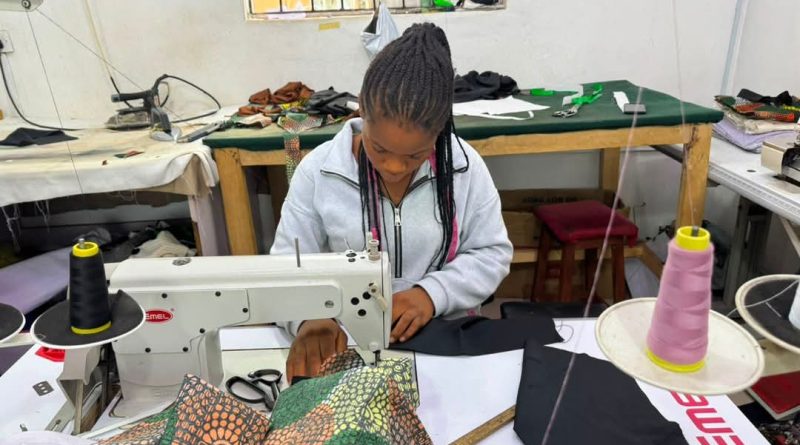
World Fashion Day: Anambra Fashion Practitioners Battle Rising Costs, Changing Trends
By Blessing Dennis
For some fashion practitioners in Anambra, fashion is no longer just about making people look good. It is a daily struggle to survive, keep up with changing trends and turn a skill into a sustainable livelihood.
As the world marked World Fashion Day on August 21, 2026, Ichie Times crew visited fashion businesses in Awka and its environs, where practitioners spoke about the realities behind the clothes, hairstyles and shoes that continue to attract customers.
At Unizik Junction, Awka, Ndubuisi Nnenna Eunice, founder of House of Nnenna, recalled how her passion for modelling eventually pushed her into fashion designing.
What started as a desire to create the outfits she imagined has grown into a business involving dressmaking, pattern drafting, beading and training.
Eunice, who benefited from the Anambra State Government’s youth skills initiative, said the fashion industry has changed significantly, with Nigerian designers increasingly developing original designs instead of relying heavily on foreign styles.
But keeping up with those changes requires constant learning.
For Ebuka Emmanuel Agbo, founder of Emax Classic Creation, fashion has become a means of survival and self reliance.

The young designer, who identifies Seyi Vodi as his mentor, said mentorship has helped shape his career. He also commended Governor Chukwuma Soludo for patronising locally made outfits, saying such support gives local designers confidence and encourages people to take indigenous fashion seriously.
The challenges, however, extend beyond clothing.
Hairstylist Elochukwu Uzodinma, popularly known as Baby Boy Touch, said the growing demand for human hair, frontal closures and sew in hairstyles has created new opportunities, but practitioners must remain patient, consistent and willing to learn to survive in the competitive market.

For Chidinma Ofoeluo, owner of Ice Queen Beauty Parlour, social media has become both a marketplace and a training ground.
She said YouTube and TikTok have made it easier for hairstylists and beauty practitioners to learn new techniques, but the speed at which trends change means anyone who stops improving risks losing customers.
In shoemaking, the struggle is even more visible.
Osemina Lucky Otaru, founder of Angelo Jude, started learning shoemaking at the age of eight. The childhood skill has since become his livelihood and a means of training others.
But after years in the business, Otaru says access to equipment and finance remains a major problem.
He identified the high cost of production equipment, inadequate funding and electricity challenges as some of the factors making it difficult for local shoemakers to expand their businesses. He called for greater government support for artisans through access to equipment and affordable financing.
Despite these challenges, the practitioners continue to hold on to their craft.
Their experiences show that behind the glamour of Nigerian fashion are young people and entrepreneurs battling rising production costs, changing consumer tastes, intense competition and the pressure to constantly upgrade their skills.
For them, fashion is not simply about appearance.
It is work. It is income. It is survival. And for many, it is the difference between depending on others and becoming self reliant.
As Nigerian fashion continues to evolve, the practitioners believe greater patronage of locally made products, improved access to finance and equipment, and sustained skills development will be crucial to keeping the industry alive and competitive.