
UNICEF Warns Six in 10 Nigerian Children Experience Abuse
By Ichie Times
The United Nations Children’s Fund (UNICEF) has raised fresh concerns over the growing child protection crisis in Nigeria, revealing that six out of every 10 Nigerian children experience some form of abuse.
The organisation also disclosed that only two out of every five children under the age of five have their births registered, while two in five young women in Nigeria were married before attaining the age of 18.
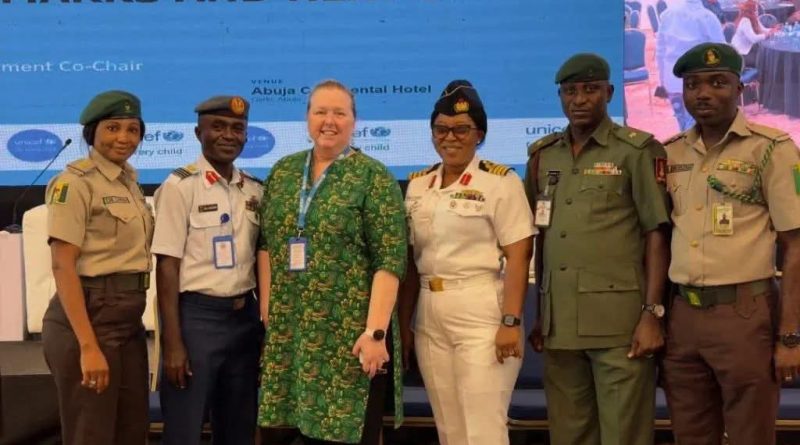
The figures were disclosed by UNICEF Chief of Child Protection, Natalie McCauley, during the organisation’s Child Protection Mid-Year Review and consultations for the development of its 2028 to 2032 Country Programme in Abuja.
McCauley said the statistics highlight the urgent need for stronger interventions to protect Nigerian children from violence, abuse, exploitation and other harmful practices.
She said UNICEF was repositioning its child protection interventions to focus more on measurable improvements in the lives of children, rather than simply recording the number of programmes or activities carried out.
According to her, UNICEF-supported programmes recorded significant progress in 2025, including strengthening the frontline child protection workforce, expanding community child protection structures, supporting nearly 120,000 children with protection services, accelerating birth registration and helping more than 1,000 children leave detention through diversion and other non-custodial measures.
However, she warned that national statistics could conceal deep inequalities affecting children in rural, conflict-affected and other vulnerable communities.
McCauley said the organisation’s priority must be to identify children who remain beyond the reach of essential services and understand the reasons for their exclusion.
She noted that children in Nigeria continue to face multiple and interconnected challenges, including abuse, child marriage, child labour, trafficking, displacement, poverty and insecurity.
The UNICEF official stressed that child protection should not be treated as a stand-alone issue, arguing that the safety and wellbeing of children are essential to national development.
She explained that a child exposed to violence, a girl forced into early marriage or a child without legal identity could face serious barriers to education, healthcare, social protection and future opportunities.
McCauley called for stronger collaboration among government ministries, development partners and other stakeholders, noting that the challenges facing children often cut across several sectors.
She advocated integrated frontline services, improved referral systems, stronger data sharing, coordinated interventions and increased domestic financing for child protection programmes.
She further said UNICEF’s next country programme would focus on strengthening government institutions, expanding the social welfare workforce and improving access to quality child protection services across Nigeria.
According to her, the ultimate measure of success would be whether vulnerable children are protected before harm occurs, survivors receive timely and respectful support, every child is registered at birth, girls are able to remain in school and children affected by conflict are supported to recover and reintegrate into society.
The ongoing consultations in Abuja are expected to shape UNICEF’s 2028 to 2032 Country Programme for Nigeria, with emphasis on evidence-based interventions capable of reaching the country’s most vulnerable children on a wider scale.