
Scale from Import Dependence, Family Funding to Manufacturing, Flexible Financing Options, Otti Tasks Igbo Businessmen
By Elochukwu Benjamin | IchieTimes
IGBARIAM: Entrepreneurs and business owners in the Southeast have been advised to embrace digital commerce, open their businesses to external investors and invest more in local manufacturing to remain competitive in the changing global economy.
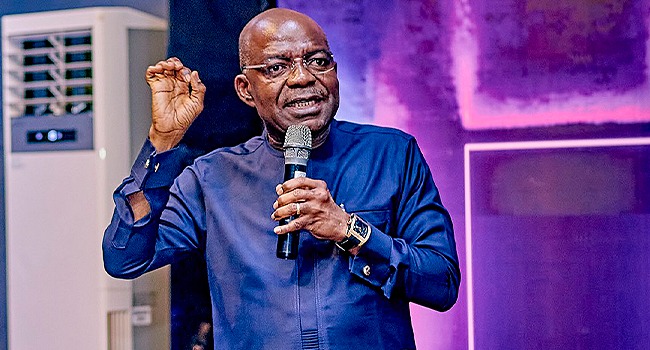
Abia State Governor, Dr Alex Otti, gave the advice on Thursday, when he spoke as the guest speaker at the maiden Chidi Anyaegbu Annual Public Lecture Series and book presentation held at Chukwuemeka Odumegwu Ojukwu University (COOU), Igbariam, Anambra State.
Otti said traditional business models built around sole proprietorships, family-owned enterprises, physical shops and heavy dependence on imported goods were increasingly inadequate to sustain business growth across generations.
The governor called for a transformation of the region’s entrepreneurial culture, stressing that businesses must adopt modern financing structures, digital platforms and sustainable production models to expand their reach and withstand competition.
Otti identified apprenticeship and mentorship as critical elements of the South-East’s business success, urging established entrepreneurs to preserve the tradition by transferring practical knowledge and experience to younger generations.
He said apprenticeship had historically served as an effective means of passing business knowledge across generations but warned that the culture of mentorship was gradually fading.
According to him, successful entrepreneurs must share the lessons of their journeys with younger people and protect them from avoidable mistakes.
The governor, however, said the region must also rethink its traditional enterprise structures, noting that businesses funded mainly through personal savings, family loans and limited community contributions often struggle to expand.
“Sole proprietorships and family-owned ventures, despite their historic contributions to the region’s economic growth, are becoming restrictive in an environment shaped by innovation, cross-border competition and changing patterns of labour and capital.
“Business owners must begin to explore shared ownership arrangements, including raising funds through the capital market and other investment platforms, to finance expansion and improve competitiveness.
“Large-scale businesses that attract public investment are examples of how entrepreneurs could mobilise capital beyond personal and family resources,” he said.
The governor maintained that competition should not be feared, describing it as a force that pushes businesses out of their comfort zones and encourages them to discover new opportunities.
On technology adoption, Otti urged traders and distributors to extend digital innovation beyond the transport sector, where online booking and electronic payment systems had improved transactions for operators and passengers.
He advocated a hybrid business model in which traders retain their physical shops and warehouses while establishing a strong presence on digital marketplaces.
According to him, “Insisting that customers must visit business premises physically before making purchases could deny entrepreneurs access to the expanding opportunities offered by digital commerce.”
Otti proposed the development of a robust online marketplace linking major commercial centres in the South-East, including Aba, Onitsha, Nnewi, Awka and Abakaliki, with millions of customers within and outside the region.
He said such a platform would help businesses expand their markets, reduce operating costs and lower barriers to entry, provided it was supported by efficient order fulfilment, reliable payment systems and prompt resolution of disputes.
The governor also called for a shift from excessive dependence on imported goods to increased domestic manufacturing, warning that an import-driven economy remained vulnerable to external disruptions.
Reflecting on the lessons of the COVID-19 pandemic, he said Nigeria needed to strengthen its productive capacity rather than depend overwhelmingly on foreign countries for manufactured goods.
Otti acknowledged the challenges facing local production but urged business leaders to confront them by investing in manufacturing and exploring opportunities that could create jobs, stimulate industrial development and generate government revenue.
He said the South-East had entrepreneurs with the capacity to help revive Nigeria’s manufacturing sector, adding that the region needed to take advantage of opportunities being lost through the relocation of manufacturing activities abroad.
The governor’s address focused on the need to preserve the region’s traditional entrepreneurial strengths while adapting to technological changes, modern financing systems and the demands of a more competitive global economy.