
No More Hiding Behind Culture to Perpetrate Evil – Imo Communities Declare After Newborn Died of Female Genital Mutilation
By Elochukwu Benjamin | IchieTimes
NJABA, IMO: A disturbing account of a newborn girl who reportedly died after being subjected to Female Genital Mutilation (FGM) without her mother’s consent has heightened calls for an end to the practice in Isu and Njaba Local Government Areas of Imo State.
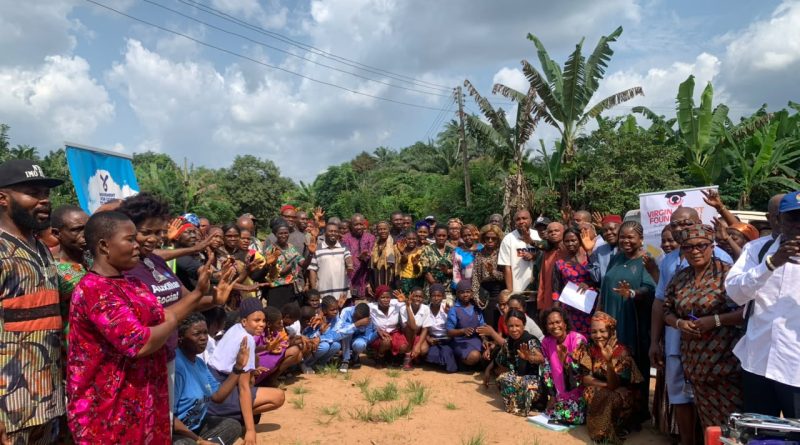
The incident was recounted during a two-day community-to-community dialogue organised by Virgin Heart Foundation (VHF), in collaboration with the UNFPA-UNICEF Joint Programme on the Elimination of Female Genital Mutilation and the Imo State Ministry of Women Affairs and Social Welfare.
The dialogue, held at the palace of HRH Eze Ugochukwu in Umundugba Autonomous Community, Isu LGA, and the Njaba Local Government Council Hall, brought together traditional rulers, town union presidents, women and youth leaders, community-based organisations and government representatives to develop strategies for ending FGM.
Narrating the incident, a participant said her mother-in-law had taken her newborn daughter to a traditional birth attendant for mutilation while she went to bathe. By the time she returned, the procedure had already been performed. The mother reportedly refused to carry the baby afterwards, who subsequently died.
The account sparked discussions on the cultural beliefs and family pressures sustaining the practice, with participants identifying the influence of mothers-in-law and other elderly women as major obstacles to ending FGM.
Some of the beliefs discussed included the perception that the clitoris was undesirable if left intact and the assumption that mutilating girls at eight days old would cause them less pain because they were too young to struggle.
Speaking on the legal implications, the Executive Director of Virgin Heart Foundation, Peace Dike, said FGM and other harmful practices were prohibited by law, warning that perpetrators risked prosecution under the Violence Against Persons (Prohibition) Act.
She highlighted penalties, including a fine of N500,000 and up to 14 years’ imprisonment, as outlined in her presentation, while describing FGM as a violation of the fundamental human rights of girls and women.
Dike stressed that cultural beliefs should not supersede the dignity, bodily integrity and right to protection of the girl child, urging communities to abandon harmful practices rather than continue to defend them in the name of tradition.
A major highlight of the dialogue was the presentation by representatives of Ubaheze Orodo Autonomous Community, which has achieved a Public Declaration of Abandonment of FGM.
Chief Comrade Solomon and Dr Mrs Onyenaakazi Julie explained that the community established an 11-member team comprising government, women, youth and religious representatives, alongside a Child Protection Committee, to monitor cases of child abuse and coordinate interventions.
They said village committees were subsequently established, trained and deployed to conduct grassroots sensitisation campaigns against FGM and other harmful practices.
Also speaking, Chief Ogu Celestine Ifeanyi, representing the traditional ruler of Umundugba Community, Eze Chukwuemeka Ugochukwu, said communities in Isu were prepared to take action against perpetrators and ensure they faced prosecution.
He warned against the medicalisation of FGM and assured that health centres, hospitals, clinics and maternity facilities where babies were delivered would be monitored to ensure compliance with efforts to eliminate the practice.
At the end of the dialogue, participants, including traditional institutions, community-based organisations, FGM survivors, youths, adolescent gender champions and advocates against FGM, pledged to establish community monitoring committees, intensify grassroots awareness campaigns, engage healthcare providers and monitor the welfare of newborn girls, while reporting suspected cases to relevant authorities.
The engagement forms part of efforts by the 20 implementing communities in Isu and Njaba LGAs to work towards public declarations abandoning FGM.
The stakeholders maintained that cultural inheritance could not justify the violation of the rights of girls, stressing that ending FGM required the commitment of traditional rulers, families, healthcare providers and other community leaders.