
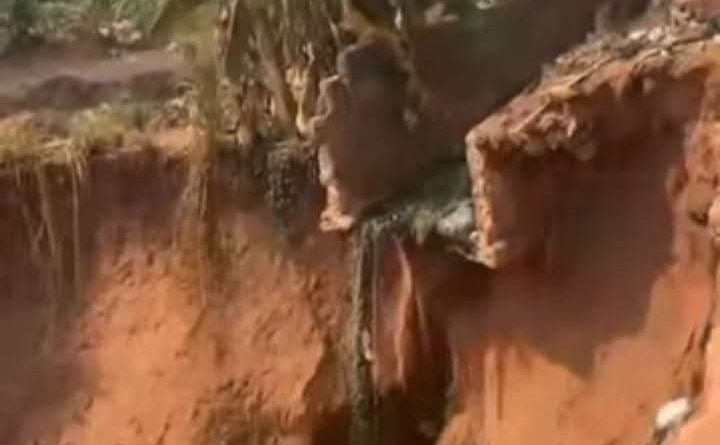
Erosion War: Anambra May Be Swallowed in 20 Years – Commissioner Warns
By Praise Chinecherem
Anambra State Commissioner for Environment, Dr Clem Aguiyi, has warned that worsening erosion and flooding could threaten the future of the state, saying urgent action is needed to prevent devastating environmental consequences.
Speaking exclusively on Tuesday, Aguiyi described the situation as a “war for survival”, warning that Anambra could lose significant habitable land to erosion within the next 20 years if the crisis is not tackled at its source.
> “In the next twenty years we may not have Anambra to call our own because every place will be taken over and swallowed by erosion,” he warned.
The commissioner said government alone could not solve the problem, noting that the scale of erosion across the state was beyond what public funding could handle without a corresponding change in residents’ behaviour.
He identified indiscriminate dumping of refuse in drains, construction on waterways, deforestation and poor storm water management as major contributors to flooding and erosion.
Aguiyi urged residents to tackle erosion at its early stages instead of waiting until small gullies become major environmental disasters requiring costly intervention.
He also warned against building on waterways, stressing that “water must always find a way” when its natural channels are blocked.
The commissioner advised prospective property owners to conduct proper land checks and comply with physical planning and environmental regulations. He further cautioned individuals against using political, traditional or social influence to circumvent environmental laws.
To reduce flooding, Aguiyi advocated catchment pits, surface tanks, permeable spaces and green areas in residential developments to control storm water runoff.
He also called for the protection of flood plains, improved drainage systems, environmental re engineering and better management of storm water discharge.
With climate change expected to intensify extreme rainfall, the commissioner said environmental protection must become a collective responsibility, warning that government interventions would have limited impact unless residents changed practices contributing to erosion and flooding.