
COOU Steps Up Food Production, Cultivates 20,000 Habanero Pepper Stands
By Felix Joe Chibunkem
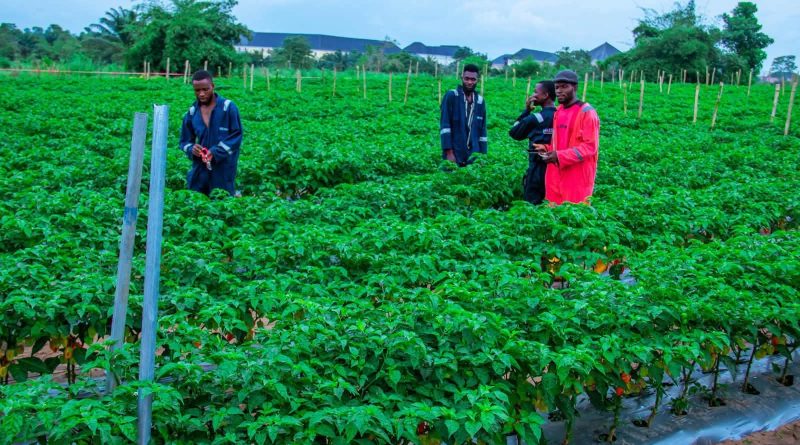
Chukwuemeka Odumegwu Ojukwu University (COOU) is expanding its agricultural drive, with about 20,000 stands of Habanero pepper already under cultivation and harvesting underway at its farm behind Emelda Hostel.
The development is part of the university’s growing push to contribute to food production, practical agricultural education and food security under the administration of its Vice Chancellor, Prof. Kate Azuka Omenugha.
During a recent visit to the agricultural project, the university’s Public Relations team observed that the pepper farm was already in its fourth week of harvest, with more than 400kg reportedly capable of being harvested weekly.
The farm, however, goes beyond pepper production.
More than 10,000 Moringa seedlings are currently being raised for transplantation to a one hectare Moringa farm, while a plantain plantation covering more than two hectares is also being developed.
Other crops being cultivated include watermelon, tomatoes and sweet cucumber, while six greenhouses support various agricultural activities.
The development marks a significant expansion from the university’s earlier agricultural initiatives, which included the cultivation of almost 10 hectares of cassava, as well as vegetables and catfish production.
The university’s agricultural projects are also providing students, particularly those in the Faculty of Agriculture, with opportunities for practical learning and hands on experience beyond classroom theories.
The initiative is being driven through strategic partnerships and Memoranda of Understanding aimed at turning the university’s agricultural potential into sustainable production.
With the growing range of crops and livestock activities, COOU is increasingly positioning its farms not only as sources of food but also as centres for agricultural innovation, student training, production and food security.
The development is raising expectations that the university could become a major contributor to agricultural development in Anambra State and Nigeria.
From cassava and catfish to pepper, plantain, Moringa, tomatoes, watermelon and cucumber, COOU’s agricultural landscape is rapidly changing from an academic project into a growing food production ecosystem.