Why Manchester United Finally Sacked Carrick: How Former Club Hero Became Scapegoat For Old Trafford’s Crisis
By Ogonna Ezebebe | Ichie Times
Michael Carrick’s impressive revival of Manchester United last season counted for little as a disastrous start to the new campaign, mounting pressure and fears of relegation finally cost him his job.
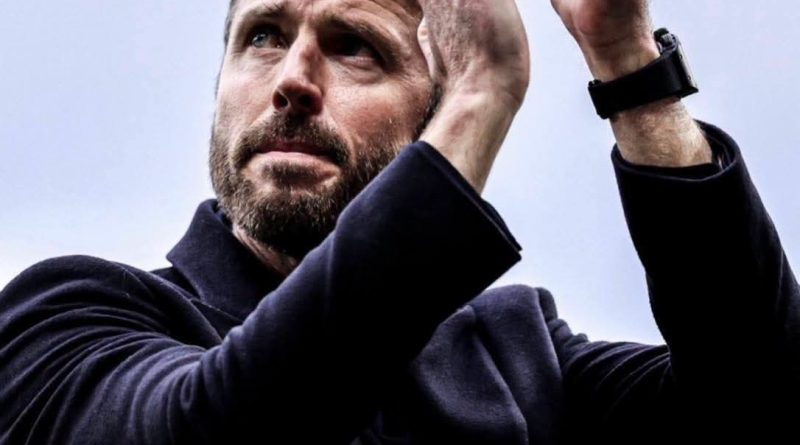
Manchester United have finally pulled the trigger on Michael Carrick, dismissing the former England midfielder as head coach following a disastrous start to the 2026/2027 season that has plunged the Premier League giants into the relegation zone.
Carrick’s dismissal, announced on Thursday, November 12, came after United’s hierarchy concluded that a managerial change was necessary to rescue a season that has quickly turned into a nightmare for the club.
The decision followed a review led by the club’s director of football, Jason Wilcox, and chief executive Omar Berrada, with co-owner Sir Jim Ratcliffe approving the move after discussions in Monaco.
But why did Manchester United finally lose patience with a manager who, only a few months ago, appeared to have restored hope at Old Trafford?
1. A disastrous start to the new season
The biggest reason behind Carrick’s dismissal was Manchester United’s alarming decline in the Premier League.
After 10 league matches, United had managed just eight points, with only one victory, leaving them 18th on the table and firmly inside the relegation zone.
The club had also recorded just three victories in 15 matches across all competitions, an embarrassing return for a team with Manchester United’s financial resources, history and ambitions.
It was the club’s worst start to a Premier League season, leaving the hierarchy increasingly concerned that the campaign could end in a battle for survival rather than a fight for European qualification.
For a club that once dominated English football, the prospect of relegation was simply unacceptable.
2. The Bournemouth defeat became a turning point
Pressure on Carrick intensified following Manchester United’s humiliating 3-0 home defeat to Bournemouth.
The performance exposed serious problems in the team’s organisation, defensive stability and ability to impose itself against opponents.
Carrick was reportedly given three additional matches to demonstrate that he remained the right man to lead the team.
However, subsequent performances did little to convince the club’s leadership.
United lost 2-0 to Chelsea, although they managed a dramatic 3-2 Champions League victory over Roma before drawing 4-4 with Aston Villa.
The results and performances reportedly reinforced the belief among the decision-makers that the team was moving in the wrong direction.
3. The Aston Villa draw was the final straw
Carrick’s last match in charge was a chaotic 4-4 draw against Aston Villa at Old Trafford on Sunday.
United twice came from two goals behind to rescue a point, but the result did little to improve their position in the league.
Rather than demonstrating a team capable of recovering its season, the match highlighted the defensive weaknesses and inconsistency that had characterised United’s campaign.
The draw left the club in 18th position, with eight points from 10 league matches.
For the hierarchy, another spirited comeback was no longer enough. They wanted consistent performances and victories, not occasional moments of individual brilliance.
4. United believed the squad was better than the results suggested
Another important factor was the growing conviction within the club’s leadership that the players available to Carrick were good enough to deliver significantly better results.
United’s hierarchy reportedly believed that the quality of the squad was not being reflected in the team’s performances.
The club had invested heavily in assembling its playing personnel, making its position in the relegation zone particularly difficult to justify.
Carrick was therefore increasingly viewed as a manager who could not get the best out of the resources available to him.
The club’s decision was ultimately based on the belief that another coach could produce better performances from the same group of players.
5. The pressure of expectations after last season’s success
Perhaps the most painful aspect of Carrick’s dismissal is how quickly his fortunes changed.
He returned to Manchester United in January 2026 following the departure of Ruben Amorim and initially took charge on an interim basis.
His impact was impressive.
Carrick won 12 of his 17 matches during the remainder of the 2025/2026 campaign, guiding United to third place in the Premier League and securing qualification for the UEFA Champions League.
His performances earned him a permanent appointment in May, with a contract running until 2028.
At the time, he was widely regarded as the man capable of restoring Manchester United’s identity and competitive spirit.
However, the expectations created by that impressive revival made the subsequent collapse even more difficult for the club to tolerate.
In less than six months after receiving a permanent contract, Carrick has gone from being celebrated as the club’s saviour to becoming another managerial casualty.
6. Manchester United are desperate to avoid another lost season
Carrick’s dismissal also reflects the desperation within Manchester United’s ownership and management to end the club’s prolonged decline.
Since Sir Alex Ferguson retired in 2013, United have struggled to rediscover the consistency and dominance that once made them one of Europe’s most feared football clubs.
Several high-profile managers have come and gone, including David Moyes, Louis van Gaal, Jose Mourinho, Ole Gunnar Solskjaer, Erik ten Hag and Ruben Amorim.
Carrick has now become another casualty of the managerial instability.
His departure is also the second time United have dismissed a head coach in 2026, following Amorim’s departure in January.
The club is clearly unwilling to allow another disappointing campaign to drift beyond recovery, particularly with relegation now a genuine concern.
Pochettino Waiting In The Wings
With Carrick gone, Manchester United have reportedly reached an agreement in principle with former Tottenham Hotspur, Paris Saint-Germain and Chelsea manager Mauricio Pochettino to take over at Old Trafford.
Pochettino, who currently manages the United States national team, is expected to complete his international commitments before assuming responsibility at Manchester United.
Reports indicate that United will have to negotiate his release from his contract, which runs until 2030, and also reach an agreement over compensation for his coaching staff.
His expected appointment represents another attempt by United to find a manager capable of rebuilding the club and restoring its place among England’s elite.
The Bigger Question
While Carrick has paid the price for Manchester United’s disastrous performances, his dismissal raises a much bigger question: Is the club’s problem really about managers, or is it a deeper institutional crisis?
The club has changed managers repeatedly since Ferguson’s departure, yet the same problems of inconsistency, poor recruitment decisions, dressing-room tensions and administrative uncertainty have continued to surface.
Carrick arrived with the promise of stability and delivered an impressive turnaround last season. But he could not sustain it.
His departure may provide United with another opportunity to reset, but unless the club addresses the structural problems that have undermined successive managers, Pochettino could find himself facing the same challenges.
For Carrick, the Old Trafford dream has ended painfully. For Manchester United, the search for a lasting solution continues.