
Proposed Nwafor Orizu University of STEM Education: A Promise That Must Be Protected
By David Okpokwasili
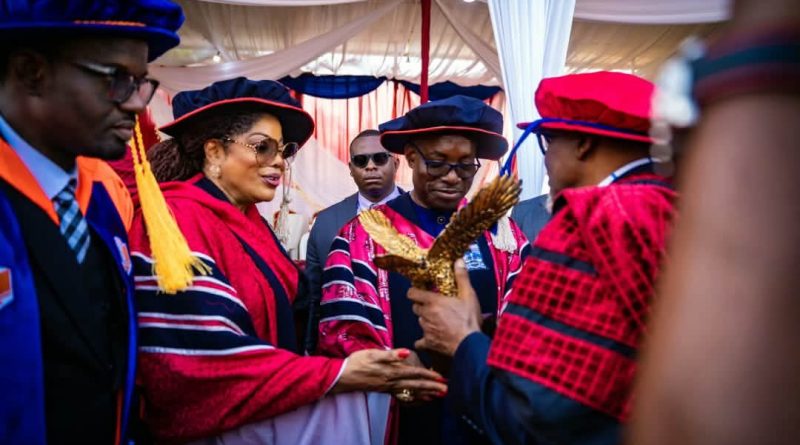
Anambra State has long understood that its greatest resource is not oil or solid minerals but the human mind. At the combined convocation ceremony of Nwafor Orizu College of Education, Nsugbe, Governor Chukwuma Soludo, the school’s Visitor and Proprietor, announced that the college will begin transitioning into the Nwafor Orizu University of STEM Education. The announcement is a bold statement about where the state wants to go. If it is handled well, it could become one of the most consequential educational decisions in the South-East in a generation.
The strongest argument for the transition is the shortage of trained science and mathematics teachers. Nigerian classrooms struggle to produce graduates confident in physics, chemistry, biology, mathematics and computing. The reason is rarely lack of student ability. It is a lack of teachers who understand these subjects deeply and can teach them well. A university devoted to STEM education attacks that problem at its source, because every well-trained teacher it produces improves the learning of hundreds of pupils over a career.
A college of education already holds an advantage here. Its core business is pedagogy. Many technical institutions produce brilliant engineers who cannot teach, and many general universities produce graduates who know content but have never studied how children learn. A university that fuses rigorous STEM content with serious teacher training can fill that gap. Its graduates would be equipped to teach coding, robotics, data literacy and laboratory science, not just recite textbook definitions.
University status also opens the door to degrees, postgraduate programmes and research. A college awarding certificates and first-level qualifications can only do so much. A university can run master’s and doctoral programmes, attract research funding, and build centres that study how science is best taught to Nigerian children in Nigerian conditions. That kind of local research is badly needed, because too much of our pedagogy is borrowed from contexts that do not match our classrooms.
The economic benefits begin with the institution itself. A growing university employs lecturers, technicians, administrators, security staff, caterers and cleaners. Around it grows a ring of businesses: student housing, transport, printing, food vendors, ICT shops and retail. Nsugbe and its neighbouring communities in Anambra East would see rising demand for property, services and labour. Universities have transformed host towns across Nigeria, and there is no reason Nsugbe should be an exception.
The deeper economic benefit is skills. Anambra is a state of traders, manufacturers and entrepreneurs, and the economy of the coming decades will reward those who can work with technology. A pipeline of graduates trained in STEM, and teachers who can multiply that training in schools, supports the state’s ambitions in manufacturing, digital services, agriculture and the technology sector. Employers who complain that graduates are unprepared would find a steadier supply of talent.
There is also the matter of retaining value within the state. Every year, Anambra families spend large sums sending children to universities elsewhere in Nigeria and abroad. A credible, affordable STEM university at home keeps part of that spending local. It also gives talented but less wealthy students a path they might otherwise never have had.
A STEM-focused institution can also seed innovation. Fabrication labs, incubation hubs and partnerships with the state’s vibrant artisan and industrial clusters could turn classroom learning into products and small businesses. The state already has a reputation for enterprise. Pairing that culture with formal scientific training could produce a distinctive Anambra model of technology-driven entrepreneurship.
The social benefits are equally real. Access to higher education remains unequal, and demand for university places far exceeds supply across Nigeria. Every additional credible institution eases that pressure and gives more young people a chance to qualify. For a state that has historically valued education, this is also a matter of keeping faith with its aspirations.
The initiative can also reshape perceptions of teaching. In many places, teacher education is seen as a second choice. Elevating a teacher-training college into a university devoted to STEM education signals that teaching is a serious, respectable and skilled profession. If the university builds a reputation for excellence, it can draw bright students into teaching who would otherwise have chosen other paths. That cultural shift matters enormously.
There is also an opportunity to expand the participation of girls and women in science and technology. Young women remain underrepresented in STEM fields, partly because they see few female role models. A university that deliberately recruits and supports female science teachers creates those role models, and the effect travels into primary and secondary schools across the state.
Finally, the name itself carries meaning. Dr. Nwafor Orizu is a respected figure in Nigeria’s history, and linking his name to a forward-looking institution connects the state’s heritage with its future. That sense of continuity can inspire pride and a feeling of ownership among the people of Nsugbe and the wider Anambra community.
Good intentions have a poor record in Nigerian higher education, so candour about the risks matters.
The first pitfall is under-funding. Upgrading the name without upgrading the infrastructure would be a hollow exercise. STEM education is expensive. It needs well-equipped laboratories, reliable power, internet connectivity, workshops, a modern library and consumables that must be replenished every year. The government must commit to sustained, predictable funding, not a one-off launch budget followed by neglect.
The second is political interference. Universities thrive when they enjoy academic freedom and sound governance. The government should appoint a competent governing council and a vice-chancellor chosen on merit, not on political loyalty or patronage. Appointments driven by connections rather than competence have damaged many institutions, and the Nwafor Orizu University cannot afford to repeat that story.
The third is rushing the process. Accreditation, curriculum approval and regulatory compliance must be done properly with the relevant federal agencies. Shortcuts may produce a quick ceremony but leave graduates holding qualifications that are questioned later. The government must be patient enough to build on solid ground.
The fourth is neglecting staff welfare. Brilliant lecturers will not stay if salaries are late, research support is absent and working conditions are poor. A state that wants a STEM university must be prepared to pay and retain people who can teach it. Recurring strikes and brain drain would quickly erode the vision.
The fifth is duplication and drift. Anambra already has other state-owned universities. The government must define clearly what makes this one distinct, so that resources are not spread thin and mandates do not overlap. A sharp identity centred on STEM education is the institution’s greatest strength and must be defended against pressure to become a general university offering every fashionable course.
The school’s own leadership carries equal responsibility. The first danger is mistaking expansion for quality. A temptation will arise to admit large numbers and launch many programmes quickly to justify university status. Quality must come first. Smaller cohorts taught well will build a stronger reputation than crowded lecture halls and poorly supervised students.
The second is failing to recruit and develop the right academics. Management should aggressively seek qualified STEM lecturers, invest in training existing staff for the new demands, and create pathways for staff to complete higher degrees. Credentials, research output and teaching ability must matter more than favouritism.
The third is weak governance and financial discipline. Transparency in procurement, admissions and the use of internally generated revenue is non-negotiable. Corruption, nepotism and admission racketeering have destroyed trust in institutions that began with great promise. Management should establish clear systems, publish accounts, and treat integrity as a founding principle.
The fourth is ignoring industry and community. A STEM university that sits apart from employers, schools and local businesses will produce irrelevant graduates. Management should build partnerships for internships, research collaboration, teaching practice and technology transfer. Schools across the state should become partners in testing new teaching methods.
The fifth is losing the teacher-education identity. In the pursuit of prestige, there is a risk of drifting toward pure science and engineering and abandoning the pedagogical strength that made the college valuable. The founding idea is STEM education, which means producing teachers, instructional designers and education technologists who can raise standards at every level. Management must keep that distinctive mission at the centre.
Lastly, management should plan for students’ welfare and the host community’s wellbeing. Adequate hostels, security, health services and fair relations with Nsugbe and neighbouring communities will determine whether the university is welcomed as a partner or resented as an intrusion.
Governor Soludo’s announcement is a visionary step, and it deserves cautious optimism. The case for a university of STEM education is strong because it responds to real needs: scarce science teachers, a changing economy and a young population hungry for opportunity. Yet vision alone does not build universities. Funding, governance, patience, academic integrity and a clear sense of purpose do.
If the Anambra State Government commits resources and respects institutional autonomy, and if the school’s management guards quality, transparency and its core mission, the Nwafor Orizu University of STEM Education could become a model for the nation. If they falter, it will join the long list of promising announcements that faded. The choice, and the responsibility, belong to both.
David Okpokwasili, a journalist, writes from Awka, Anambra State Capital