
Operation Kosaye: How Ogun Is Closing Escape Routes for Kidnappers
By Ichie Times
For years, the forests and border communities along the Lagos Ogun corridor were regarded as safe havens for kidnappers and other criminal networks. Today, a coordinated security offensive is beginning to change that narrative.
Known as Operation Kosaye, meaning “there is no hiding place” in Yoruba, the initiative is built around intelligence gathering, inter state cooperation and sustained security operations aimed at denying criminals the opportunity to exploit the boundaries between Lagos and Ogun States.
The operation, launched at the Police Training School in Iperu Remo, brings together security forces working across the Lagos Ogun axis, particularly areas stretching through Kara, the Long Bridge, Sagamu, Ogere and Ijebu Ode towards Ikorodu and Epe.
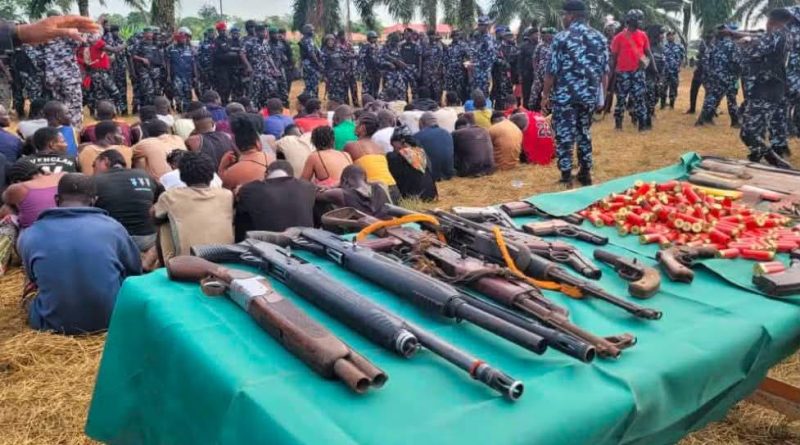
According to reports on the operation, security personnel have conducted forest searches, rescued kidnapped victims, arrested suspected criminals and recovered weapons and communication equipment. Criminal camps and illegal settlements allegedly used as hideouts have also been targeted.
What makes Operation Kosaye particularly significant is its emphasis on inter state collaboration. Rather than allowing criminals to exploit jurisdictional boundaries by committing crimes in one state and escaping into another, security agencies are working across borders to maintain operational continuity.
The initiative also builds on years of security investment in Ogun State, including support for the Amotekun Corps, police formations and community based intelligence networks.
Governor Dapo Abiodun has consistently positioned security as a foundation for economic development, arguing that businesses, farmers, residents and investors cannot thrive where insecurity persists.
The strategic importance of Ogun makes the issue even more critical. The state borders Lagos, Nigeria’s commercial hub, and also connects to the Republic of Benin, making it an important corridor for the movement of people and goods.
Recent cooperation involving the police, military, Department of State Services, NSCDC and Amotekun has further expanded security coordination around vulnerable border communities.
The emerging lesson from Operation Kosaye is clear: criminal networks cannot be effectively defeated when security agencies operate within isolated boundaries.
For Ogun and Lagos, the objective now goes beyond making arrests. It is about permanently disrupting the forests, routes and networks that have allowed criminals to operate with relative freedom.
If the collaboration is sustained, Operation Kosaye could become more than a security operation. It could offer a practical model for coordinated policing across state boundaries and a stronger response to organised crime in Nigeria.
For criminals who once depended on forests and jurisdictional gaps for protection, the message from the operation is increasingly clear:
There is no hiding place.